


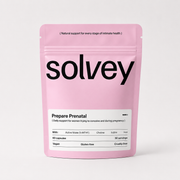



Trying to conceive, or newly pregnant? Chances are you've already heard that folic acid is important. What's less well known: there's a difference between folic acid and folate, and that difference is bigger than you might think.
Why folic acid matters so much
Folate is a B vitamin your body needs for cell division and for maternal tissue growth during pregnancy. Around pregnancy, this vitamin gets special attention, and for good reason. In the very first weeks of pregnancy, the embryo lays the foundation for the nervous system, including what's known as the neural tube.
Supplemental folic acid intake increases maternal folate status. Low maternal folate status is a risk factor in the development of neural tube defects in the developing foetus.
Because this development happens so early, often before you even know you're pregnant, the advice is to start supplementing before conception. In many countries, health authorities advise women to take folic acid daily from the moment they start trying, and to continue this through the first weeks of pregnancy.
Folic acid and folate: not quite the same thing
Folic acid is the synthetic form of folate. Your body can't use folic acid directly: it first needs to be converted through several steps into 5-MTHF, the form that's actually active in your body. 5-MTHF itself doesn't need to go through that conversion and is immediately available for use and transport in the blood.
Research examining how these two forms behave in the body shows this difference in practice too: after taking 5-MTHF, the concentration of the active form in the blood rose much faster and much higher than after taking the same amount of folic acid.
Why this matters even more for some women
Some women carry a genetic variation in what's known as the MTHFR gene, the gene responsible for converting folic acid into its active form. With this variation, that conversion runs less efficiently. That means the body has a harder time turning folic acid into it's active form, while 5-MTHF skips that step entirely and can be used just as well regardless of this genetic variation.
Another point worth knowing: vitamin B12
High doses of folic acid can mask a symptom that's actually an important signal: anemia caused by a vitamin B12 deficiency. As a result, a B12 deficiency can go unnoticed for longer. 5-MTHF doesn't mask this signal in the same way, meaning a potential B12 deficiency can come to light sooner.
What does this mean for you?
This doesn't mean folic acid suddenly stops working. Supplemental folic acid intake increasing maternal folate status, and the link between low maternal folate status and neural tube defect risk, is extensively researched and well established. What the research on the two forms does show is that 5-MTHF has a number of practical differences: it's immediately available, it works even with an MTHFR variation, and it doesn't mask a B12 deficiency.
Not sure which form is right for you, or have questions about dosage and timing? Talk to your doctor, midwife, or pharmacist. A varied diet with vegetables, fruit, and whole grains also always contributes to your folate intake, as a complement to a supplement.
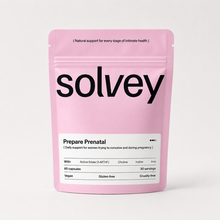
* Folic acid contributes to cell division and to maternal tissue growth during pregnancy. Both play a role in the very early weeks of pregnancy, when the foundations for the baby's development are being laid.
* Zinc contributes to normal fertility and reproduction. That makes it a nutrient worth considering not just once you're pregnant, but already while you're trying to conceive.
* Vitamin B12 contributes to normal red blood cell formation and has a role in the process of cell division. Both are especially relevant early in pregnancy, when your body is producing more blood and the baby's cells are dividing rapidly.


